
Saudi Arabia’s Q1 Openings Show Where Hotel Growth Is Actually Landing
Saudi Arabia’s hotel pipeline began translating into open rooms in early 2026, with new properties landing across Riyadh, Madinah, and the Red Sea coast, each reflecting a different corner of the Kingdom’s tourism growth and offering an early, concrete look at how years of announced development are beginning to show up as operating hotels rather than signed agreements.
Knight Frank data points to 94,500 hotel rooms set to be added to the Kingdom’s supply, which currently stands at 171,650 rooms with a further 94,500 keys under construction or in advanced planning. The first quarter of 2026 offered an early look at how that pipeline is beginning to show up on the ground, with three openings in particular illustrating the range of demand drivers currently shaping Saudi hotel development.
In Madinah, DoubleTree by Hilton Madinah Gate opened in January with 325 rooms inside the Knowledge Economic City development, offering direct access to transport links and the Prophet’s Mosque, a property squarely aimed at religious tourism demand. Madinah’s hotel market operates on fundamentally different economics from much of the rest of the Kingdom, driven by consistent, high-volume Umrah and pilgrimage traffic that provides a demand floor largely independent of the broader tourism cycles affecting leisure and business-focused markets elsewhere.
In Riyadh, Sofitel Riyadh Hotel and Convention Centre added 388 rooms along with large-scale event space, positioning it for the capital’s corporate and meetings market. The addition of substantial convention and event facilities alongside guest rooms points to a deliberate strategy of capturing Riyadh’s growing meetings, incentives, conferences and exhibitions sector, an area of demand that has expanded considerably as the capital has positioned itself as a regional business and diplomatic hub.
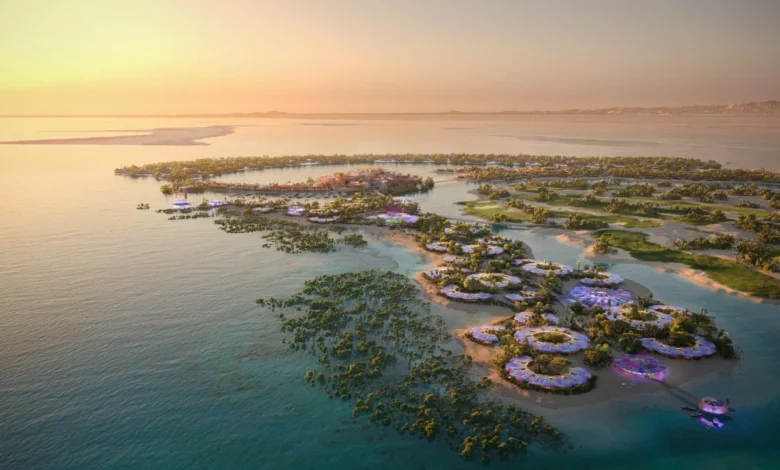
On the coast, SLS The Red Sea marked the brand’s entry into Saudi Arabia with a 150-key resort on Shura Island, built into the destination’s environmental framework. Unlike the Madinah and Riyadh openings, which serve established and predictable demand bases, the Red Sea opening represents a genuinely new market being created largely from scratch, dependent on the broader success of the Red Sea Global giga-project in establishing an entirely new international leisure destination.
The spread of these three openings, pilgrimage-driven in Madinah, corporate in Riyadh, destination-led on the Red Sea, illustrates a pipeline that isn’t following a single growth story but several running simultaneously, each tied to a different part of the Kingdom’s tourism strategy and each carrying distinct risk and demand profiles. Hotel searches in Makkah and Madinah rose 20.67 percent and 25.16 percent respectively in early 2026, driven by Umrah, family travel, and earlier Eid planning, underlining how pilgrimage demand continues to shape development priorities even as leisure and business segments expand elsewhere.